Blog · Platforms
Your listing: a title, description and photos that win guests over
19 January 2026 · 5 min read

A guest decides in a few seconds whether to click on your listing. That decision depends on two things: the first photo and the title. Only then do they read the description and look at the rest of the photos.
Yet listings often get little attention. Owners write them once, at the start, and never change them again. January 2026 is a good moment to change that. Bookings for spring and summer are picking up now, and guests are busy comparing.
In this article we look at every part of your listing, from the title to the translations.
The title: write what guests are looking for
A title is no place for poetry. Guests scan a list of dozens of properties. They are looking for three things: where is it, what kind of property is it and what makes it special.
A strong title contains those three elements:
- Location. A municipality, a neighbourhood or a recognisable place. "Knokke centre", "Ghent Patershol", "Durbuy".
- Type. Apartment, villa, holiday home, loft, chalet.
- Feature. The one thing that sets your property apart: sea view, garden, sauna, close to the beach, room for twelve.
Compare two titles. "Cosy stay for an unforgettable holiday" says nothing. "Sea-view apartment, 2 bedrooms, De Haan" says everything a guest wants to know.
Avoid vague adjectives such as "beautiful", "unique" or "atmospheric". Everyone uses them. A fact is more convincing.
The first photo: your shop window
The first photo is the most important part of your listing. It appears in the search results, on the map and in shared links. Choose it with care.
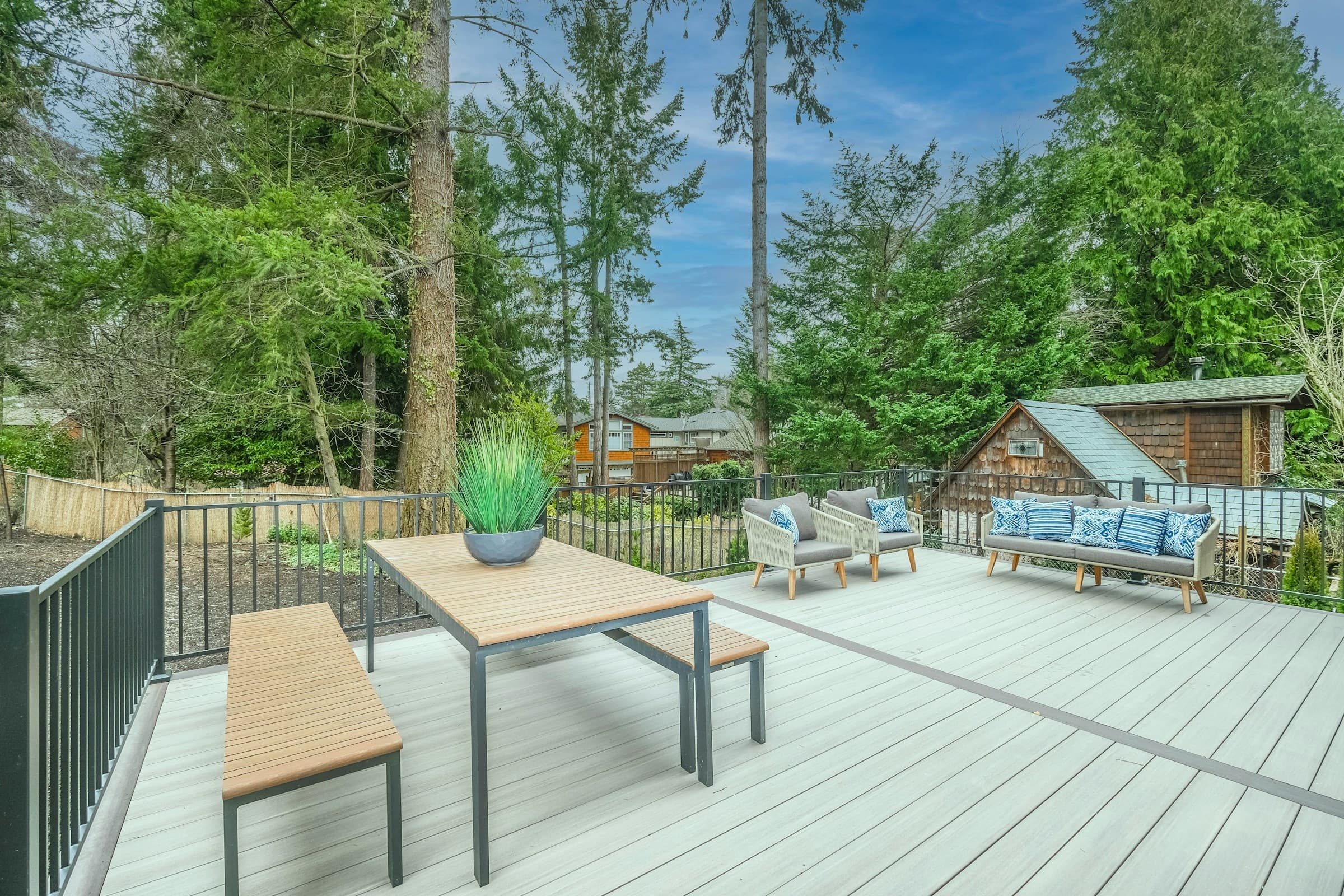
Choose the photo that shows your property's strongest feature. If you have a sea view, show the view from the living room. If you have a large garden with a terrace, show that. For a group house, a spacious living room or a large dining table often works best.
A few rules of thumb:
- Choose a landscape, bright photo with plenty of daylight.
- Avoid a photo of the front of the building, unless it is truly special.
- Avoid a close-up of a detail, such as a vase or a cushion.
- After a few weeks, test a different first photo and see whether you get more visitors.
The order of the photos: tell a story
After the first photo, a guest keeps browsing. The order determines whether they get a clear picture of the property or end up confused.
Work from general to specific, and follow the logic of a guided tour:
- The strongest photo, first.
- The living room and the kitchen.
- The bedrooms, with every bed clearly visible.
- The bathrooms.
- Outdoor spaces: terrace, garden, balcony.
- The surroundings: the beach, the street, the woods.
- Practical details: parking space, charging point, bike storage.
Use enough photos, but no repetition. Five photos of the same living room from different angles add little. Add a short caption to each photo, such as "Bedroom 2: two single beds". Platforms allow this, and it helps guests with poor eyesight or who use translation tools.
The description: a fixed structure
A good description is easy to scan. Guests do not read from start to finish. They look for the answer to their own question. A fixed structure helps them find it quickly.
Intro. Two or three sentences that sum up the property: who it suits and what makes it special.
Bedrooms. For each room, the number and type of beds. "Bedroom 1: double bed 160 cm. Bedroom 2: two single beds."
Kitchen. What is available: dishwasher, oven, coffee machine, enough crockery for the number of guests.
Comfort. Wifi, television, heating, washing machine, bed linen and towels.
Access. How guests get in, whether there is a lift, where they park.
Why this property. What guests experience here that they will not find elsewhere.
Location. Distance to the beach, the market square, the station or the supermarket, in minutes on foot or by car.
Be honest about the limitations
A listing that is too good to be true leads to disappointed guests and bad reviews. So be honest about what the property does not have.
Think of steep stairs, no lift, limited parking, a second bedroom without a window, noise from a busy street or a bathroom that has to be shared. Also mention whether the property is suitable for young children or people with reduced mobility.
Guests appreciate that honesty. Someone who knows what to expect is less likely to be dissatisfied. And a guest who does not suit your property is better off booking elsewhere.
Translations: speak your guests' language
A Belgian holiday home attracts guests from Flanders, Wallonia, the Netherlands, Germany, France and the United Kingdom. Platforms translate automatically, but those translations are often clumsy.
Write the listing yourself in the main languages, or have it checked by someone who knows the language well. At least Dutch, French and English. For the coast and the Ardennes, German is a strong addition.
Do not forget your registration number. In Flanders you must register your property in advance with Toerisme Vlaanderen (Visit Flanders' tourism authority), and that number belongs in every listing.
Keep your listing up to date
A listing is never finished. Review it at least every season.
- Replace photos when you have renewed something, such as a new sofa or a refurbished bathroom.
- Update the description when something has changed, such as a new charging point.
- Read your reviews. Questions or complaints that keep coming back can be answered in advance in the description.
- Change the first photo with the season. A sunny terrace works in summer, a warm living room in winter.
Help with your listing
A strong listing is the start. Then come pricing, guests and follow-up. YourDomi sets prices daily based on market data and communicates with guests 7 days a week in their own language. You receive a monthly overview for each property. If you would like to know what that could mean for your property, request a personal proposal.